

Mabon: Autumn Balance, Second Harvest & The Magic of Gathering Enough

The first cool evening of fall can feel like a quiet invitation. The light softens. Apples and squash fill market bins. The year begins to tip from outward growth toward inward tending.
Mabon is commonly celebrated by modern Pagans around the autumn equinox, when day and night stand in near balance. It is often called a second harvest festival, a time to give thanks for what has grown, gather what can be gathered, and prepare for the darker half of the year.
It is also a beautiful season for a life inventory.
This guide frames Mabon as gathering enough: appreciating what has ripened, noticing what still needs care, sharing what you can, and making thoughtful choices before winter asks for more rest, warmth, and simplicity.

What Mabon means today
Mabon is a modern Pagan name for the autumn equinox festival. Many people celebrate it as part of the Wheel of the Year, alongside seasonal festivals such as Samhain, Yule, Imbolc, Ostara, Beltane, Litha, and Lammas.
The word “Mabon” is often connected with Mabon ap Modron, a figure from Welsh mythology. Still, it is helpful and respectful to be clear: Mabon is not the documented ancient Celtic name for an autumn equinox harvest celebration. The use of “Mabon” for this seasonal festival is modern, especially within contemporary Pagan and Wiccan traditions.
That does not make the celebration less meaningful. It simply means the holiday lives in a modern spiritual context, shaped by older seasonal rhythms, harvest customs, mythic inspiration, and present-day practice.
For beginners, this can be freeing. You do not need to perform a complex rite, know every correspondence, or recreate an ancient ceremony. A meaningful Mabon celebration can be as simple as lighting a candle, baking apples, donating food, and asking one honest question:
What is enough for this season of my life?
Mabon meaning often centers on balance, gratitude, and harvest, but balance here is not stiff or mathematical. It is living balance. It shifts with weather, energy, grief, joy, work, family, health, and need.
Reflection prompt:
Where has your life grown since spring?
What feels ripe and ready to enjoy?
What are you still trying to force, even though the season is changing?
Mabon at a glance
Use this as a simple reference for planning a seasonal meal, altar, ritual, walk, or quiet evening at home.
Element | Seasonal guide |
Themes | Balance, second harvest, gratitude, abundance, preparation, reciprocity, transition, release |
Symbols | Apples, grapes, pumpkins, acorns, fallen leaves, grain, baskets, candles, seeds, autumn foliage |
Best timing | Autumn equinox, late September, harvest meals, seasonal transitions, or whenever you need a life inventory |
Mabon usually falls around the autumn equinox in late September in the Northern Hemisphere. In the United States, many people mark it sometime between September 20 and September 23, depending on the year and their own schedule.
You can celebrate on the exact equinox, the nearest weekend, the first truly cool day, or the night you finally feel ready to pause. Seasonal practice becomes more sustainable when it fits real life.
If you are learning the Wheel of the Year Mabon can serve as a gentle doorway into autumn. It does not demand perfection. It asks for attention.
A simple Mabon check-in might sound like this:
What has fed me this year?
What have I helped grow?
What am I willing to share?
What do I need to store, repair, simplify, or release before the darker months?
Balance Isn’t Perfectly Equal Balance changes with the season. Sometimes it means doing more. Sometimes it means allowing yourself to need less.
That last line matters. In harvest season, there can be pressure to keep gathering, producing, and preparing. Yet autumn also teaches limits. A tree does not keep every leaf. A garden does not ripen forever. Enough is sacred because it has edges.

Simple ways to celebrate Mabon
A beginner-friendly Mabon celebration can be humble, sensory, and rooted in ordinary life. Think warm food, clean counters, fresh air, shared resources, and small signs of beauty.
Prepare a seasonal meal
Cook with what feels abundant where you live. Apples, squash, root vegetables, corn, mushrooms, grapes, nuts, bread, beans, cider, and warming spices all fit the season.
A Mabon meal does not need to be fancy. Try:
Roasted squash with herbs
Apple crisp or baked apples
Fresh bread with butter or jam
Soup made from late-summer vegetables
A simple cheese, fruit, and nut plate
Cider, tea, or spiced juice
Before eating, pause and name one source of nourishment. It might be the soil, the farmers, the grocery workers, your own labor, a loved one, or the paycheck that bought the food.
Reflection prompt:
What nourishes you that you often forget to thank?
Visit an orchard, farm stand, or farmers market
Apple picking is a classic autumn activity, but any seasonal outing can become a Mabon practice. Walk slowly. Notice the colors, scents, and textures. Let the abundance of the season be visible.
If you buy something, choose one item with intention. An apple can become part of a ritual. A pumpkin can sit by your door as a symbol of protection and plenty. A bunch of herbs can dry in the kitchen as a reminder that preparation can be beautiful.
Decorate with fallen leaves
Gather fallen leaves, acorns, seed pods, or small branches from places where collecting is allowed. Avoid taking from protected land, private property without permission, or living plants that still need their strength.
Place your finds in a bowl, tuck leaves under a candle plate, or press a few in a book. Let your home reflect the season without needing to buy much.
This is part of gathering enough too. Beauty does not always require more consumption.
Donate food or share a meal
Harvest holidays naturally ask about reciprocity. If you have more than you need, share it. Donate shelf-stable food to a local pantry, contribute to a community fridge, bring soup to a neighbor, or invite someone to dinner.
The spiritual point is not performance. It is relationship.
Ask:
What do I have in excess?
Where could that excess become care?
Bake with apples
Apples carry strong autumn symbolism. They suggest sweetness, cycles, seeds, nourishment, and hidden wisdom. Slice one across the middle and you may see the star shape formed by the seeds.
A kitchen witch approach can be simple. Stir cinnamon into apples and say, “May this home be warmed.” Add oats and say, “May we be steady.” Share a portion if you can.
Tidy your home for the darker half of the year
Mabon is a good time to clear spaces you will rely on during fall and winter. You might clean the entryway, wash blankets, organize the pantry, check candles or flashlights, or refresh the kitchen.
This is not about making your home look perfect. It is about reducing friction before the days grow shorter.
Choose one small area and ask:
What here supports me?
What here drains me?
What can be repaired, donated, composted, recycled, or released?
Preserve seasonal foods
If you enjoy practical seasonal skills, preserve a little of the harvest. Make applesauce, freeze herbs, dry orange slices, pickle vegetables, or simmer fruit into a small batch of jam.
Preserving food turns gratitude into preparation. It says, “I see what is abundant now, and I will carry some of it forward.”
Take a gratitude walk
Walk outside without headphones if it feels safe to do so. Notice three signs of ripening and three signs of release. You might see full seed heads, yellowing grass, migrating birds, fallen leaves, late flowers, or bare branches beginning to show.
Let the walk be slow enough to change your breathing.
A quiet phrase for the walk:
I receive the season as it is. I meet my life as it is.
Create a small harvest altar
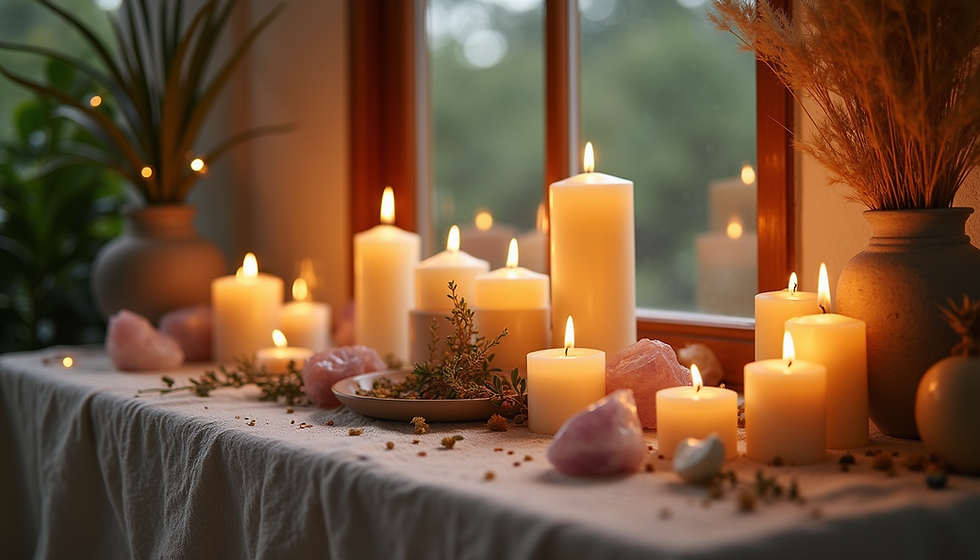
For simple Mabon altar ideas, use a shelf, windowsill, tray, or small cloth. Add an apple, candle, leaf, acorn, bowl of grain, cup of tea, or handwritten gratitude note.
Keep it safe and practical. Use an LED candle if you have pets, children, shared housing, or any concern about flame.
Your altar can hold three things:
Something gathered
Something given thanks for
Something you are ready to release

A five-minute practice for Mabon
This short practice, called The Harvest Balance, works well on the equinox, before a meal, after a long day, or anytime you need a life inventory.
You will need:
A notebook or piece of paper
A pen
Five quiet minutes
Practice The Harvest Balance
Sit somewhere comfortable. Place both feet on the floor if that feels grounding.
Take five slow breaths.
With each breath, let your attention settle:
Notice your body.
Notice the room.
Notice the season.
Notice what you are carrying.
Notice what is ready to be named.
Write three questions:
What is abundant?
This might be food, ideas, support, emotion, clutter, responsibility, creativity, or longing. Abundance is not always easy. Sometimes the thing overflowing is the thing asking for boundaries.
What feels depleted?
Name this with care. Energy, money, patience, sleep, inspiration, trust, and time can all become thin. Naming depletion is not failure. It is honest tending.
What needs rebalancing?
Look for one small shift. Not a full life overhaul. One adjustment.
Say aloud or silently:
“I honor what is full and gently tend what needs restoring.”
Then choose one balancing action to take within 24 hours.
Good options include:
Drink water and eat something nourishing.
Send the message you have been avoiding.
Put one bill, form, or task in order.
Rest for 20 minutes without earning it.
Clear one surface.
Share food.
Ask for help.
Say no to one nonessential demand.
This is Mabon for beginners at its best: simple, grounded, and honest.
A 10 to 15 minute Mabon ritual
The Autumn Balance Bowl is a gentle Mabon ritual for gratitude, release, and preparation. It is especially useful if your life feels full, complicated, or in transition.
You will need:
A bowl
An apple or another seasonal food
Two leaves, or two small pieces of paper
A pen
Water or tea
An optional LED candle
Choose a quiet spot. Place the bowl in front of you. Set the apple or seasonal food inside it. Put the water or tea nearby. If using an LED candle, turn it on.
Take a few breaths and let the bowl represent your life as it is right now: what it holds, what it cannot hold, what it has held for too long.
On one leaf or piece of paper, write:
What I am carrying forward
This may be a value, relationship, plan, project, lesson, or source of strength.
On the other, write:
What I am leaving with this season
This may be a habit, pressure, fear, expectation, expired goal, or old version of yourself.
Place both beside the bowl.
Name three things you are grateful for. Let them be specific. Instead of “my home,” you might name “the blanket on the couch.” Instead of “food,” you might name “soup in the freezer.” Specific gratitude feels more rooted.
Then say:
“I gather what nourishes, release what has finished, and prepare with gratitude for the season ahead.”
Drink the water or tea. Eat the apple or seasonal food later, or share it if that feels right.
To close the ritual, choose one grounded action to take within 72 hours. Pick something realistic enough that you will actually do it.
You might:
Schedule rest.
Make soup.
Donate food.
Clean the fridge.
Put savings toward a winter need.
Return borrowed items.
Finish a lingering task.
Remove one commitment from your calendar.
Store summer clothes and bring out sweaters.
Write a thank-you note.
The ritual is complete when your choice touches ordinary life. Seasonal magic becomes stronger when it changes the next small thing you do.
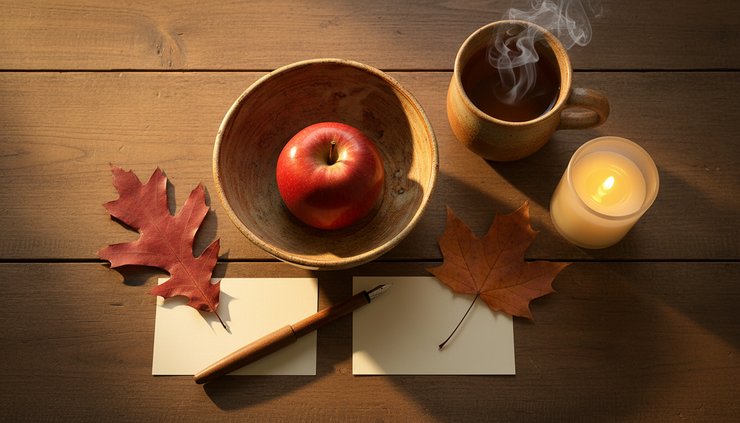
Gathering enough as the season turns
Mabon reminds us that harvest is not only about gathering more. It is also about recognizing what is enough, restoring what has become depleted, sharing what we can, and choosing carefully what deserves a place beside us in the season ahead.
Let this be your fresh next step: choose one small Mabon practice today. Bake apples. Take a gratitude walk. Clear one shelf. Donate one bag of food. Light a candle and name what you are carrying forward.
The darker half of the year does not arrive all at once. It comes leaf by leaf, evening by evening. Meet it the same way, with attention, gratitude, and enough held gently in both hands.


Comments