

Pan: Wild Freedom, Sacred Instinct & The Music of the Living World

Pan does not fit neatly indoors. He belongs to rocky hillsides, grazing paths, pine shade, goat bells, sudden laughter, and music that sounds handmade because it is.
In ancient Greek religion, Pan was a rustic god of shepherds, flocks, wild countryside, fertility, and untamed nature. He is often shown with goat-like features, usually horns, shaggy legs, and hooves, which mark him as a being of field, mountain, and instinct rather than polished city life.
For modern spiritual seekers, Pan can also speak to a very human need: remembering your wild self. That does not mean abandoning your life, hurting others, or calling every impulse sacred. It means listening again to the part of you that knows how to play, create, move, desire, rest, and belong to the living world.

Pan at a glance
Themes
Symbols
Sacred connections
Wilderness, instinct, freedom, music, shepherding, fertility, pleasure, creativity, play, protection of flocks
Panpipes or syrinx, goats, shepherd’s crook, pine, caves, mountains, wild landscapes
Arcadia, shepherds, nymphs, rustic music, midday, wild places
If you came searching for the Pan Greek god as a beginner, start here: Pan is not a vague symbol for “nature” in general. He is a specific ancient god with roots in Greek cult, myth, and place, especially Arcadia, a mountainous region of the Peloponnese known in antiquity for pastoral life.
Reflection prompt: Where do you feel most like yourself, outdoors, in music, around animals, while making art, or somewhere else?
Pan in ancient Greek myth and worship
Pan’s mythology is earthy, strange, playful, and sometimes uncomfortable by modern standards. That is part of studying ancient gods honestly. We do not need to flatten him into pure sweetness, and we do not need to ignore the wildness that made him powerful.
Pan is strongly tied to Arcadia, where shepherds and herders honored him as a protector of flocks and a presence in lonely places. Ancient writers often connect him with mountains, caves, wooded slopes, and the company of nymphs. His parentage varies by source, though Hermes is commonly named as his father in several traditions.
One of Pan’s most recognizable features is his hybrid form. He is part human, part goat, with horns, hooves, and a shaggy body. In Greek religious imagination, this was not a costume or a joke. It marked him as liminal, close to animals, fertility, wild terrain, and the instincts that polite society tries to manage.
Pan is also linked with the syrinx, often called panpipes. A well-known version of the story comes through the Roman poet Ovid, not an earlier Greek source. In that tale, the nymph Syrinx flees Pan and is transformed into reeds. Pan cuts the reeds and fashions them into his pipes. It is a myth about desire, pursuit, transformation, and the birth of music. For modern readers, it should be approached with care. Devotion does not require romanticizing coercion in ancient stories.
Then there is panic. The word comes from Greek ideas about sudden, irrational terror associated with Pan. Ancient people could attribute a burst of fear in lonely places, or a sudden rout in battle, to Pan’s presence. Herodotus tells a famous story connected to the Persian Wars, where Pan appears in relation to Athens and the Battle of Marathon tradition. Whether read as history, myth, or civic memory, it shows Pan as a god whose power could move through the body before the mind understood what was happening.
Pan is not “the Devil,” and he is not interchangeable with every horned deity. Later Christian art and folklore sometimes borrowed goatish or horned imagery for demonic figures, but that does not make Pan secretly evil. Modern occult, Pagan, and popular interpretations may blend Pan with broader horned god imagery. That can be meaningful in those systems, but it is different from ancient Greek religion.
Reflection prompt: What stories have shaped your image of horned or wild deities? Which of those come from ancient sources, and which come from later art, religion, or pop culture?

Pan as the guide to your wild self
Pan reminds us that human beings are animals too. We need sunlight, breath, movement, sound, touch, humor, appetite, and rest. We need beauty that serves no purpose except joy.
To work with Pan spiritually, you do not have to run away to the woods or reject your responsibilities. His medicine is more grounded than that. He asks where life has become too tight. Where have you turned yourself into a schedule with a pulse? Where did you stop singing, stretching, flirting with creativity, or wandering without a productivity goal?
Pan’s wildness can show up in simple ways:
A song played badly but honestly
A walk taken without tracking every step
A meal enjoyed slowly
A sketchbook opened with no plan
A dance in the kitchen
A few minutes listening to birds, traffic, wind, or rain
A boundary spoken because your body has been telling the truth
Pleasure is part of Pan’s realm, but pleasure needs wisdom. Creativity is sacred, but it still needs care. Instinct can guide you, but it should not be used as an excuse to ignore consent, safety, or kindness.
Wild Doesn’t Mean Reckless Sacred freedom can include boundaries, responsibility, and respect for other people’s autonomy. Pan’s wildness is not permission to trample your life or anyone else’s. It is an invitation to become more alive with discernment.
Reflection prompt: What is one harmless joy you keep postponing because it does not seem “useful” enough?
Simple devotional acts for Pan
Offerings to Pan do not need to be elaborate. Since he is tied to rustic places, music, animals, and the open air, many devotional acts are physical and direct.
Try one of these:
Spend time outdoors, even for ten minutes.
Play music, especially simple flute, whistle, drum, strings, or voice.
Dance in a private, joyful, unpolished way.
Care for animals with patience and respect.
Pick up litter on a trail, in a park, or near a creek.
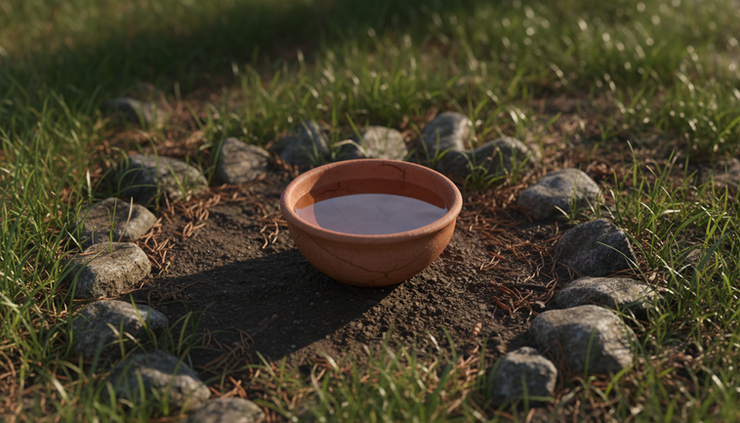
Offer fresh water outdoors in a clean place where it will not harm wildlife.
Learn about Greek mythology from reliable sources.
Support habitat conservation or local land care efforts.
Enjoy something simply because it brings joy.
Intentionally make room for play on your calendar.
For offerings, think plain and living: clean water, bread, milk, honey, fruit, olive oil, pine, music, or a sincere act of land care. If you leave anything outdoors, keep it safe for animals and the ecosystem. When in doubt, pour clean water or make a nonmaterial offering through song, breath, or service.
You might say:
Pan, lord of the wild hillside, goat-footed keeper of flocks, receive this water, this music, this breath. Teach me joy with roots. Teach me freedom with care.
Reflection prompt: What would feel like a real offering from your life right now, time, music, care for an animal, or attention to the land?
A short devotion called Return to the Wild
This devotion takes 2 to 5 minutes. It is simple enough for beginners and useful when you feel boxed in by screens, chores, noise, or worry.
Stand outdoors if you can. If not, stand near an open window.
Take five slow breaths.
With each breath, notice one sound around you. Do not judge the sounds. Let them arrive.
You might hear:
Wind
Birds
Cars
Voices
Leaves
Water
Your own breathing
Then say:
Pan, keeper of the wild places, help me remember what makes me feel alive.
Ask yourself:
What part of myself has become too confined?
Do not force a dramatic answer. Let the first honest thing rise.
Choose one healthy act of freedom for today. Keep it small enough to do.
Examples:
Walk without headphones for five minutes.
Sing one song.
Stretch your body.
Say no to one unnecessary demand.
Make something with your hands.
Sit under a tree.
Play with a pet.
Cook something you actually want to eat.
End with a nod, a breath, or a quiet thank-you.
Reflection prompt: What did your body notice before your mind had an explanation?
A longer ritual called The Wild Path
This 10 to 15 minute ritual is for times when you feel trapped, dull, overmanaged, or cut off from your creative life. It keeps Pan’s wildness balanced with responsibility.
Gather:
A stone
A leaf or pinecone
A small bowl or cup of water
Paper and a pen
Optional music, especially flute, pipes, drum, or any rustic sound
Place the stone in front of you. Let it stand for the responsibilities that keep you grounded. These may include work, care for family, health, promises, study, or needed structure.
Place the leaf or pinecone beside it. Let it stand for the living wildness in you.
Place the water nearby. Let it stand for refreshment, instinct, and flow.
If you use music, play it softly for a minute. If not, listen to the room or the world outside.
On the paper, answer three questions:
What feels confined?
What wants expression?
What responsibility keeps my freedom grounded?
Hold the stone in one hand and the leaf or pinecone in the other. Say:
May I live with instinct and wisdom, freedom and care.
Touch the water. You can use a fingertip to touch your wrist, throat, or heart.
Now choose one action to take within 72 hours. Make it clear and doable.
Examples:
Spend an hour painting, writing, or playing music.
Take a real walk in a park or wild place.
Research one Greek source about Pan.
Clean up a trail or outdoor space.
Schedule unscheduled time.
Have an honest conversation about a boundary.
Make a playlist that wakes up your body.
Donate to or volunteer with habitat conservation.
When finished, return the leaf or pinecone outside if appropriate. Keep the stone on an altar, windowsill, or desk as a reminder. Pour the water at the base of a plant or tree if it is safe to do so.
Reflection prompt: What kind of freedom becomes stronger when it has a clear container?

Walk with Pan in a grounded way
Pan’s call can be joyful, funny, unnerving, sensual, creative, and deeply alive. He belongs to shepherds and flocks, caves and mountains, nymph-haunted springs, rustic pipes, and the sudden shiver that runs through the body in wild places.
Begin with respect. Learn the myths. Notice which ideas come from ancient Greek sources and which come from later occult, Pagan, artistic, or popular traditions. Let those layers speak, but do not blur them into one vague horned figure.
Most of all, let Pan bring you back to the living world. Life is not meant to exist entirely inside schedules, walls, and obligations. Listen for what makes you feel alive. Give your instincts room to breathe. Let a little of the wild back into your everyday life.
Your next step is simple: choose one act today that feels playful, earthy, musical, kind, or free, and do it with your whole attention.


Comments